

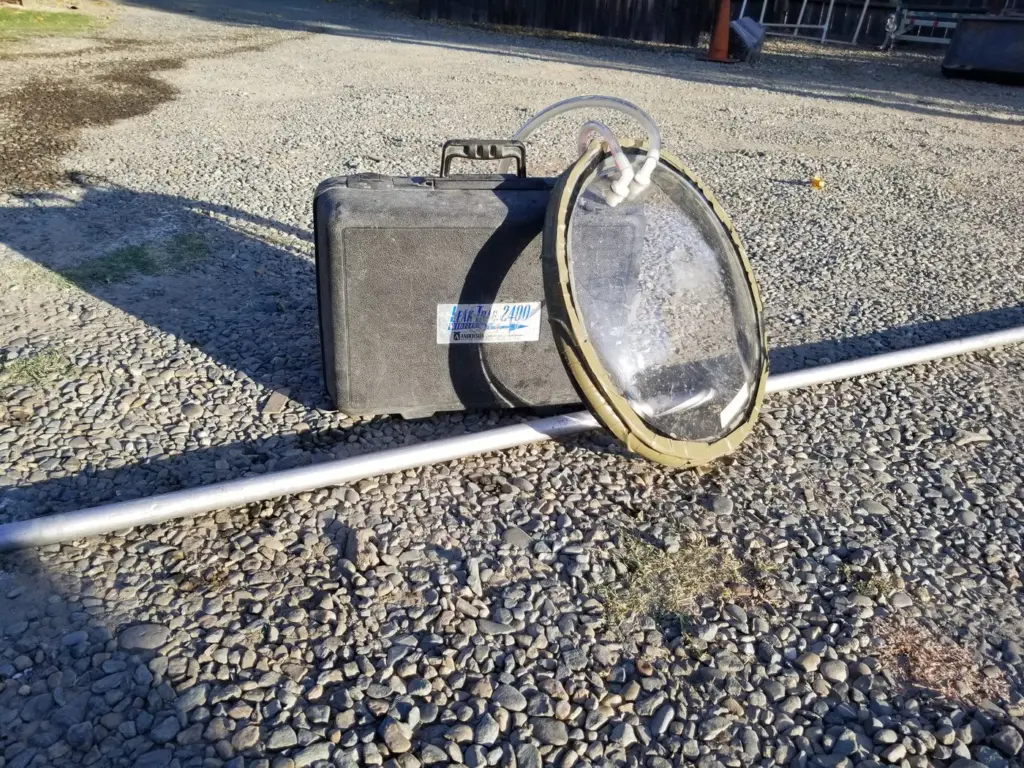
First, a free test you can do
Leak or evaporation? Try the bucket test.
Set a five-gallon bucket on the second step and fill it to the pool’s water level (a concrete block inside helps it stay put). Over two or three days the bucket loses water to evaporation, and gains it from rain, at the same rate as the pool.
As long as nobody splashes water out and you don’t backwash, if the pool drops more than the bucket, you have a leak. Enter what you measured:
Pool size (optional, for gallons)
Move the sliders to match what you measured.
How it works
A tiny current, a high-pitched ring
The rod on the end of our telescopic pole sends a small electric current into the water from one end. The current travels through the water until it finds a ground, and a hole in the liner is a ground. The other end of the rod picks it up, and the headset we wear rings at a high pitch.
Screws around the faceplates and steps also go to ground, so the detector rings near them too. Over a hole it rings at a higher pitch, and that’s how we tell the difference.
Press play to sweep the pool.
The process
A leak hunt, step by step
From our own leak detection photos.
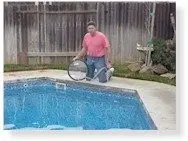
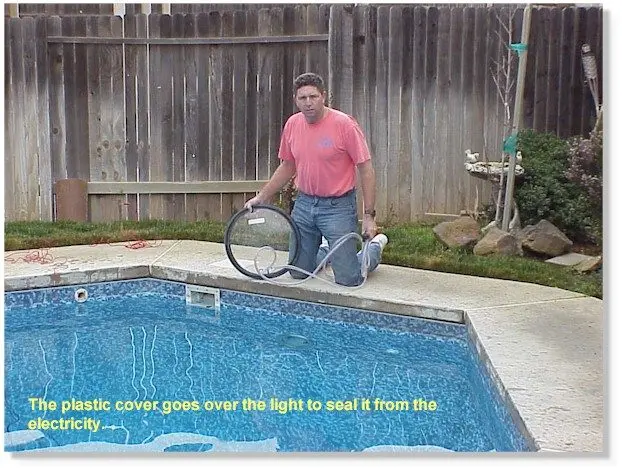
1. We cover the light, because it acts like a ground. 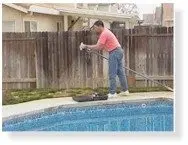
2. All the equipment goes together. 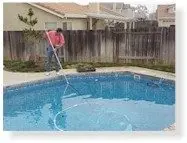
3. The whole pool is swept with the detector, looking for holes. 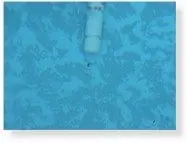
4. The detector finds a hole. 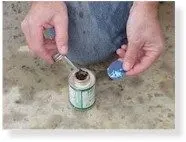
5. Glue goes on the patch. 
6. The patch goes over the hole. 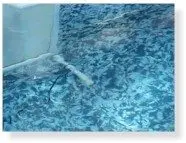
7. Beeps tell us exactly where the hole is. 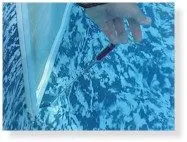
8. A dye test shows how big the hole is.
Things to watch out for
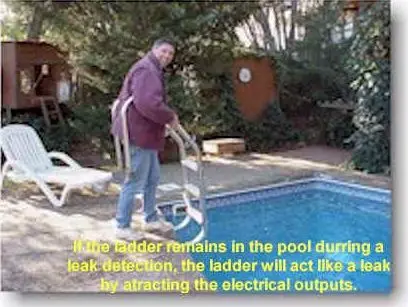
Lights and ladders fool detectors
Metal screws and a ladder in the pool both go to ground, so the current runs to them instead of to a hole. We have ways of working around them: the light gets a sealed cover and the ladder comes out.
With the light covered and the ladder out, the current heads for any hole in the liner. The screws around the faceplates and steps still ring, but a hole rings higher, so we can tell them apart.
Free estimates · Greater Sacramento
Ready for a brand-new summer?
Tell us about your pool. We’ll come out, measure, bring liner samples to your kitchen table and give you a straight price. No fast-talking salespeople, ever.