

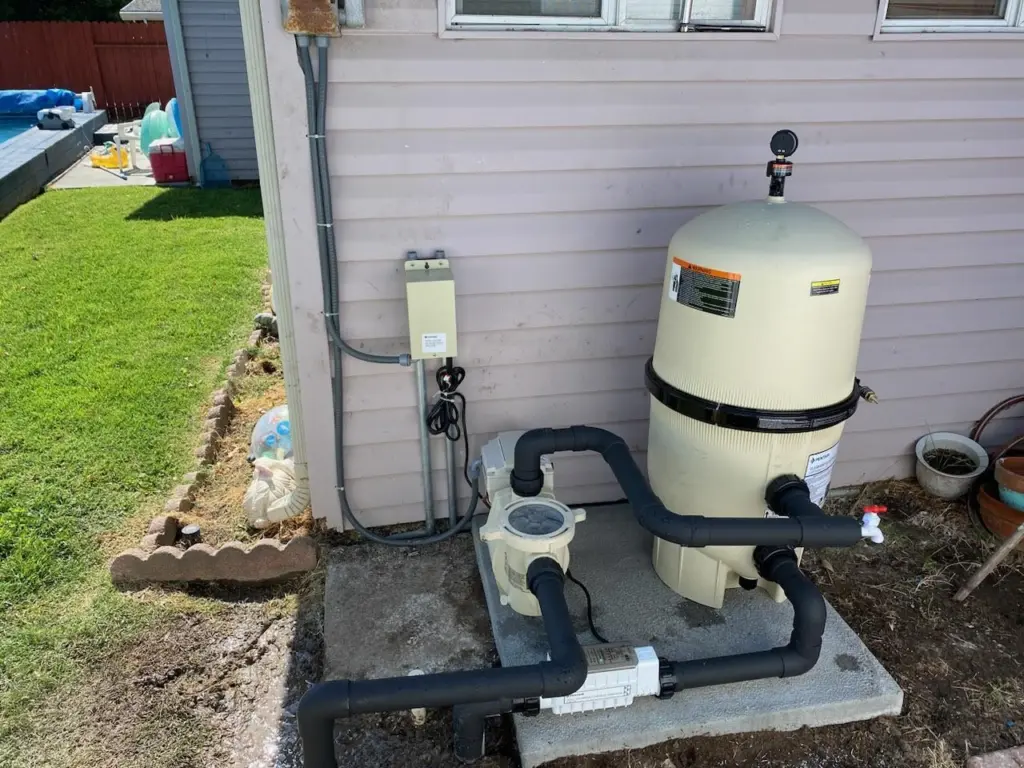
Salt systems
Salt in, chlorine out
Salt systems are popular for good reason. Salt is sodium chloride; as the water passes through the system’s cell, electrolysis splits the salt into usable chlorine, which sanitizes the pool. The result is a milder, more comfortable swim, with less chlorine smell and less eye irritation.
They cost less to run over time. The cell only needs replacing every few years, and salt costs less than chlorine. There’s also no hazardous chlorine to store or measure out by hand.
An average home pool uses about 100 to 150 pounds of salt a year, mostly lost to splash-out and backwashing; evaporation doesn’t take the salt with it.
Barely salty
The salt level in a saltwater pool is a fraction of what’s in your tears. Most people can barely taste it, and it never tastes bad.
Our pick: a saltwater chlorine generator. Second best: liquid chlorine.
Chlorine, ranked
The cheapest ways to keep it clean
From cheapest to dearest to run. And two things never to do in a vinyl pool.
- Saltwater chlorine generatorBy far the best and cheapest: the chlorine is all but free.
- Automatic dispenser for large tabletsAn inline chlorinator at the filter system.
- Any automatic dispenserSteady dosing beats tossing in chlorine by hand.
- Liquid chlorineSimple and effective; it just costs the most over a season.
- Never a floating dispenser in an in-ground vinyl pool: in time it damages the liner.
- Never tablets in the skimmer: they can badly damage the underground plumbing.
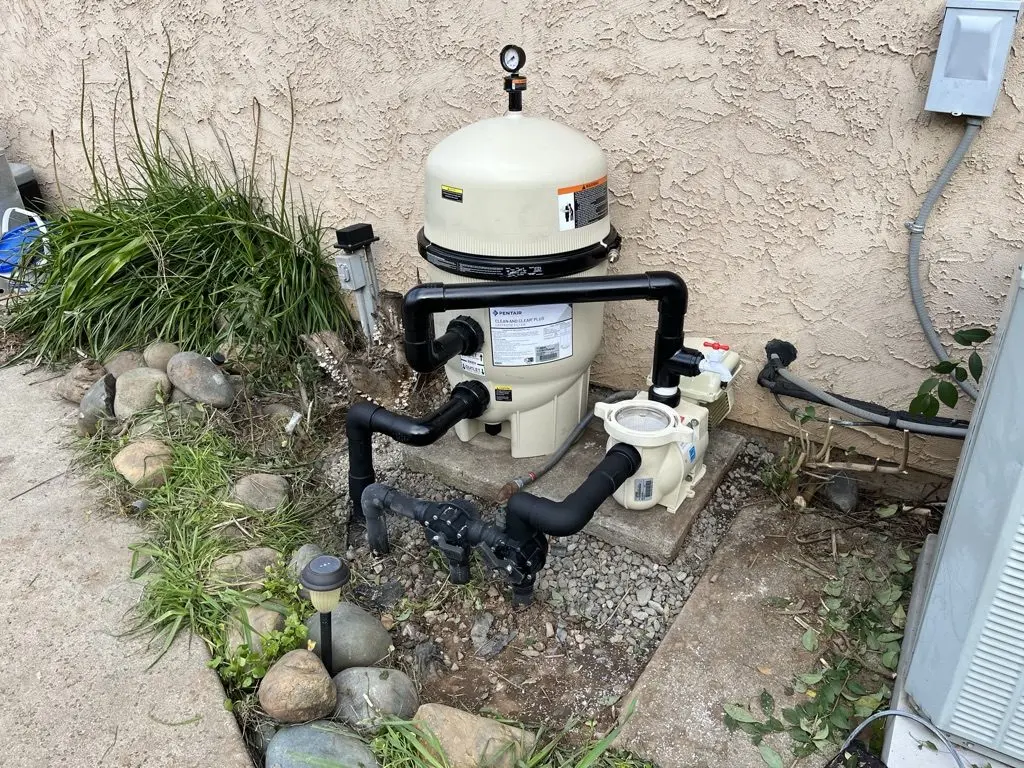
Filtration upgrades
An old filter works harder
- Cleaner water, less work. A new system catches more debris, so you spend less time and money on upkeep.
- Lower power bills. New filtration equipment is more energy-efficient than older models.
- Healthier water. Old systems can leak or malfunction, which can mean poor water quality.
- A longer-lived pool. Less wear and tear on the parts, fewer repairs, and a selling point if you ever move.
Equipment pads
Tidy, efficient, out of the way
Free estimates · Greater Sacramento
Ready for a brand-new summer?
Tell us about your pool. We’ll come out, measure, bring liner samples to your kitchen table and give you a straight price. No fast-talking salespeople, ever.